Summary Naked Mole-rat Heterocephalus glaber Fact Sheet LibGuides at International Environment Library Consortium
Table Of Content
Misfitanimals.com does not intend to provide veterinary advice. While we provide information, resources, and education, the content here is not a substitute for veterinary guidance. Threats include unfamiliar colonies, which will incite aggression if encountered. Many species rely on their inner circadian rhythm to dictate their physical and behavioral changes. This instinct responds to the day/night cycle and the changing daylight hours through the seasons.
Food/Eating Habits
Minimal development of reproductive structures in nonbreeding individuals. Populations are markedly less in areas with other burrowing species to compete with. The stable temperatures underground have evolved an inability to thermoregulate. Naked mole-rats sleep and operate closely to keep internal temperatures steady. Some workers will function as soldiers who will defend the colony in the face of threats. They will band together to confront any approaching predators.
Reproduction and development
They get all the hydration they need from their plant-based diet! They typically only consume part of a root or tuber, leaving enough behind for it to survive and provide another meal. Distribution of colonies is patchy, although naked mole-rats do reside in multiple protected areas.
Naked Mole Rat
They are nursed for the first month of their lives and then another member of the colony takes over for the queen to keep the pups fed. A cluster of Naked Mole-Rats makes up a single community with each having specific roles. Clusters have an average of 75 to 80 mole-rats (but can be as high as 300 animals) who all live together in a complex array of burrows underground. The naked mole rat and other mole rats aren’t moles at all. It is a misconception that moles burrow into gardens to eat the roots of plants. They are actually after the earthworms that are found in garden soil.
Naked And Unafraid: The Secret Lives Of Naked Mole Rats

Scientists found the part of a naked mole-rat brain responsible for touch is enlarged[7]. From this, one-third is connected to the teeth, proving how important their teeth are in interacting with the environment. They rarely break the earth’s surface to see the light of day.
Body Structure
Their evolution and our own show some striking parallels that may shed light on how our ancestors diverged from other apes. Damaraland mole rats live in colonies of up to 25 individuals who share a sleeping nest and burrow system. These groups are thought to be extended families comprising several generations. Reproduction is limited to the largest female and to one or two large males.
Best Dog Food for Huskies
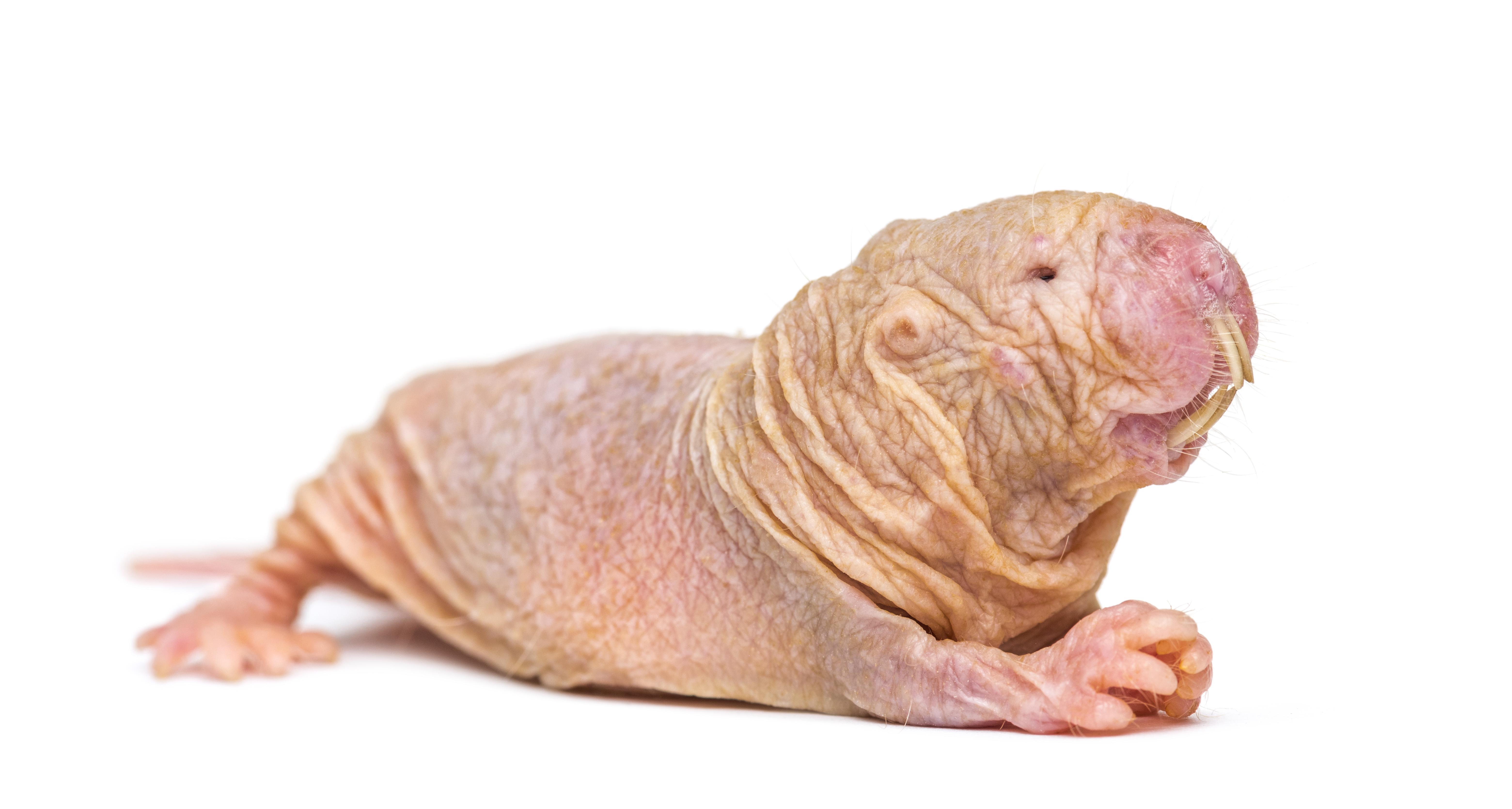
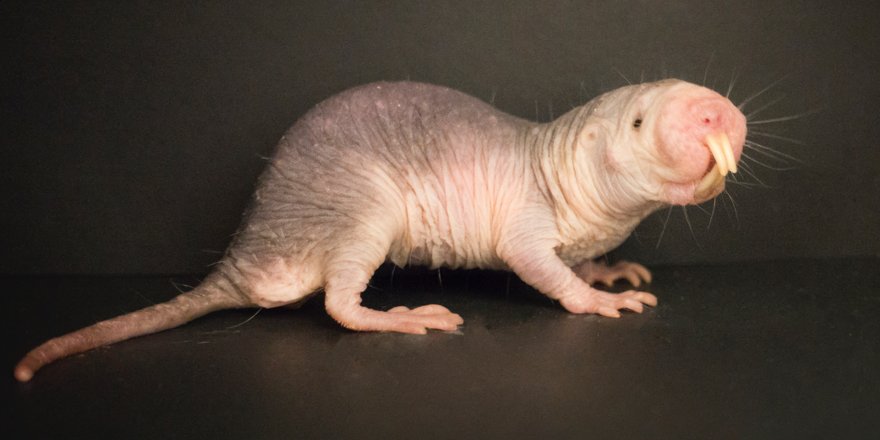
And since they spend their lives underground, they don't need hair for sun protection. It's hard to see, but naked mole-rats do have about 100 fine hairs on their body that act like whiskers to help them feel what's around them. Hairs between their toes help sweep soil behind them while tunneling. Naked mole-rats aren't moles or rats, and they actually aren't even naked, despite what their name suggests. They are burrowing, bucktoothed rodents that look like miniature, skinny walruses, native to East Africa, and they have become a major source of fascination for scientists.
Naked Mole-Rat Behavior and Lifestyle
Large soldier mole-rats will pile on top of each other to block the tunnel, creating a barrier with their large teeth. Another mole-rat will return to the colony to warn them of the dangers so other resting soldiers can be on guard, particularly protecting the Queen. The underground habitat dictates naked mole-rat behavior. Due to the dark environment, they do not have a set circadian rhythm that dictates activity.
Naked Mole Rat (Heterocephalus glaber)
Naked Mole Rats: The Animal Kingdom's Most Functional Dysfunctional Family - WAMU 88.5
Naked Mole Rats: The Animal Kingdom's Most Functional Dysfunctional Family.
Posted: Fri, 07 Dec 2012 08:00:00 GMT [source]
Most zoos also provide glass siding so viewers can see the animals interacting and exploring their underground home in a way that would otherwise be impossible. Most of the time, humans do not directly interact with these underground creatures. However, farmers do not appreciate the damage that these rodents can cause to crops. In some areas and certain species, humans capture these rodents for food as well. Laden and Wrangham predicted that hominids and mole rats should tend to have left fossils in the same habitats. They looked at fossil sites from six million years ago to half a million years ago in eastern and southern Africa, where hominids lived.
To keep the colony healthy and safe, there are chambers, or rooms, at different points along the tunnel system. Each chamber has a purpose, just like the rooms in your home. There is the nesting chamber, or nursery, where the queen (dominant female) stays with the pups (babies), and feeding chambers, used for collecting and storing food—a mole-rat pantry! There is even a toilet chamber, where the members go to the toilet (sorry, no shower). Gestation can last roughly 70 days and a litter can number three to twelve pups and it is not uncommon to see large litters of up to 28 pups. The average litter is just under a dozen and breeding is once a year in the wild, provided the litter survives.
Among mammals, body mass usually correlates with lifespan, and smaller species generally live a shorter life. However, the naked mole-rat seems to defy the ‘disposable soma’ theory, as the reproducing queen of a naked mole-rat colony can actually live longer than its subordinates. The naked mole-rat does not regulate its body temperature in typical mammalian fashion. They are thermoconformers rather than thermoregulators in that, unlike other mammals, body temperature tracks ambient temperatures. For example, cold naked mole-rats huddle together or seek shallow parts of the burrows that are warmed by the sun.
They are also well represented in zoos, with well-established and maintained colonies. With a variety of unique characteristics, the species is significant to research on a number of different topics. Continued monitoring is necessary to better understand these unique animals. Minimal development and human interference exists in their present range, but if agriculture continues to expand they could be viewed as pests, as they will readily consume roots and tubers. When a group of mole-rats finds a large tuber (sometimes more than 1 foot in diameter), they generally bore through it, eating mainly the interior flesh while leaving the thin epidermis intact. This behavior may allow the plant to remain healthy for some time, indeed even to continue growing, thereby providing a long-term food resource for the colony.
Naked mole-rat tunnel systems can have a cumulative length of two to three miles. Naked mole-rats can run both forward and backward through the maze of tunnels they dig. The dominant female, or queen, has 12 nipples to feed up to 27 pups. About 25 percent of a naked mole-rat's muscle mass is in its jaws.
If this ancient ape was anything like living chimps and gorillas, it depended mainly on fruits. When it couldn’t find fruits, it turned to other so-called “fallback foods” such as soft leaves and pith. Pups begin performing work behaviors (digging, sweeping, carrying, etc.) at 3-4 weeks old. Maturation rate is variable, but in general juveniles are physiologically capable of reproduction by age one. They have no external ears and they have tiny eyes, which make them virtually blind.


Comments
Post a Comment